

Does Betrayal Hit Strong Women Harder?

I’ve been sitting with a question lately, and I’m not entirely sure I have the answer.
Does betrayal actually hit strong women harder?
My initial reaction was yes, of course it does. But the more I’ve thought about it, the less certain I’ve become. I don’t believe that the pain itself is necessarily greater. Betrayal hurts whether you’re strong, dependent, confident, insecure, successful, struggling.
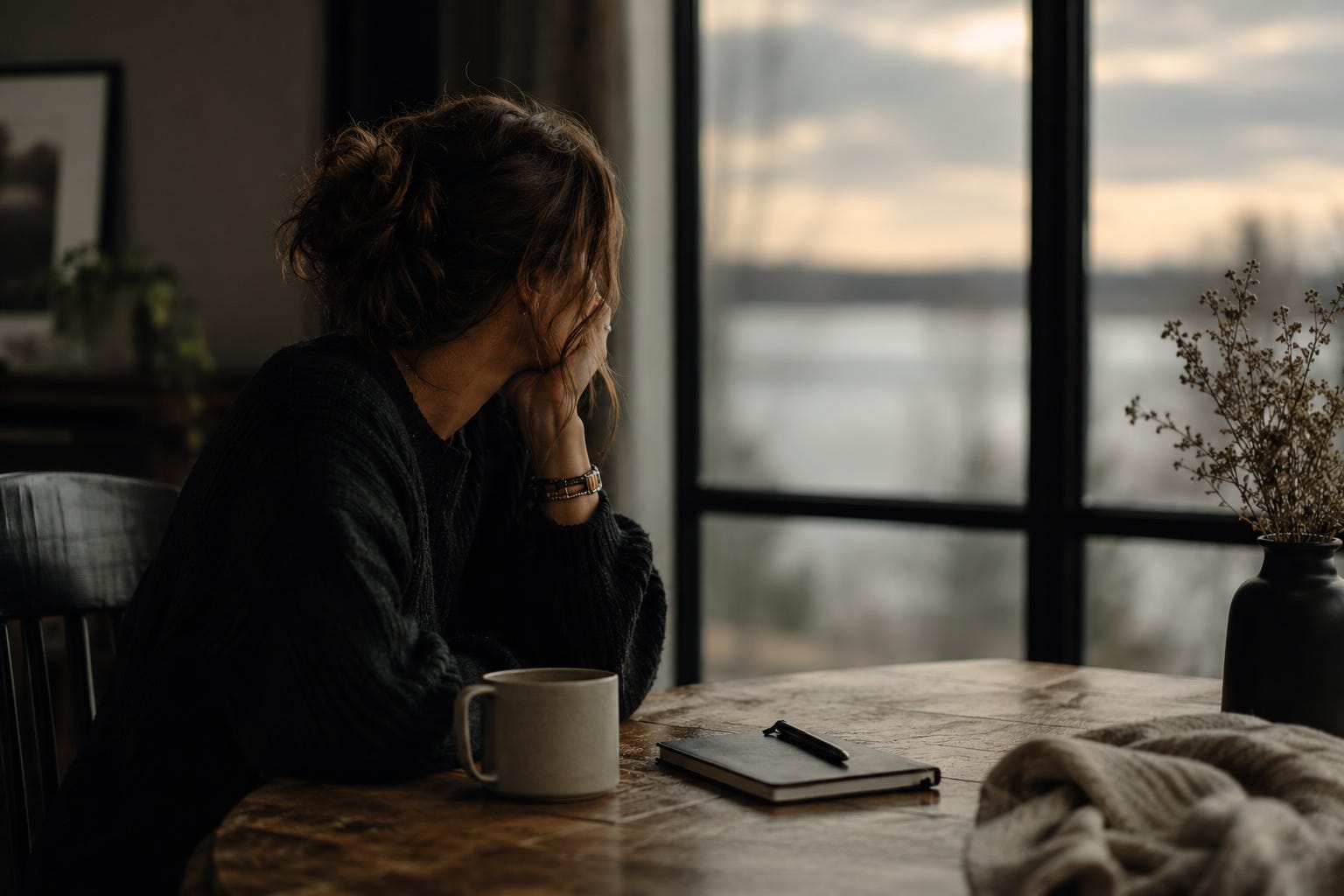
What I keep wondering is whether betrayal lands differently when your identity has been organized around being strong. Is this a case of the stronger you are the harder you fall?
Most of the women I know didn’t become strong because they were trying to win an award for resilience. They became strong because, at some point, strength was the most reliable option available. It got them through difficult marriages, childhoods, bosses, and seasons of life. Strength worked.
In fact, strength often works so well that it becomes invisible.
You stop seeing it as something you do and start seeing it as who you are.
You’re the one who can figure it out, the resourceful one. The one who can hold it together, you’re resilient. The one people count on when things fall apart.
And for a long time, that identity feels empowering.
Until something happens that doesn’t respond to strength.
When a woman experiences an identity-shattering betrayal; whether that’s infidelity, being pushed out of a company she helped build, a business partnership imploding, a financial collapse, or a long-term friendship breach, everyone immediately focuses on what happened.
But I suspect the deeper disruption is often what the event reveals, because suddenly the strategy that has worked for decades stops working.
You can’t solve grief or manage uncertainty. There is no spreadsheet or checklist for heartbreak and you can’t muscle your way back into trust.
And perhaps most unsettling part of this is you can’t immediately answer the question everyone keeps asking:
“What are you going to do?”
I think this is where many women get into trouble, not because they make bad decisions, but because they make premature ones.
From the outside it looks like they’re deciding whether to stay or leave, forgive or not forgive, rebuild or walk away, take the job or start the business, but underneath that decision is often something much more primal…
They’re trying to stabilize, to get back to a version of themselves that feels recognizable. This creates a tremendous amount of pressure.
I’ve done enough living at this point to know that uncertainty is uncomfortable for everyone, but I sometimes wonder if it is uniquely threatening for women whose identities have been built around competence and self-sufficiency… Because if your entire life has taught you that your value comes from being capable, what happens when capability isn’t enough?
What happens when the strategy that helped build you no longer works?
She knows she needs help at this point but doesn’t know how to ask for it. Asking for help feels so humiliating… not because help is inherently humiliating, but because needing help directly contradicts the identity you’ve spent a lifetime building.
Which begs the question; “If I’ve always been the strong one, who am I when strength isn’t solving the problem?”
This is why I keep coming back to the possibility that the real wound isn’t always the betrayal itself. Sometimes it’s the collapse of certainty around who we thought we were.
There’s another layer to this that I think we often overlook
Many strong women secretly believe that strength should have prevented this from happening in the first place. Perhaps not consciously, but underneath the shock is often a profound sense of disbelief where questions like:
“How did I not see this coming?”
“How did I miss the signs?”
And the one that baffles her the most… “How did I let someone get one over on me?”
For women who have spent decades cultivating discernment, reading people, anticipating problems, and staying three steps ahead, betrayal doesn’t just feel painful. It can feel embarrassing. Not because they’ve done anything, but because the event collides with a deeply held belief that strength should have been enough to protect them.
After all, these things happen to naïve people, reckless people, people who aren’t paying attention… She is always paying attention…
Betrayal that shatters identity is terrible no matter who you are. But I’ve come to believe that healing doesn’t begin by obsessing over the event itself. It begins by becoming curious about the woman the event has exposed.
Because beneath the grief, beneath the anger, beneath the endless replaying of conversations and warning signs, there is often a much deeper loss taking place.
She isn’t just mourning what happened, she’s mourning the version of herself who believed this could never happen to her. The woman who thought she would see it coming, who thought she was too smart, too discerning, too aware, too strong to find herself here.
And perhaps that’s why these events feel so disorienting, not because we lose certainty about another person, but because we lose certainty about ourselves.
The irony, of course, is that the very thing she is fighting to get back to may be the thing that is asking to be released; the woman who believed her strength was responsible for keeping her safe.
Maybe the invitation isn’t to become her again… maybe it’s to discover who she is without having to be her.
I don’t know that there is a shortcut through that particular reckoning, but I do know this:
The moment you stop asking, “How did this happen?” and begin asking, “What did I believe about myself that this event has challenged?” everything changes.
Because that is where the rebuilding begins.
Not from the rubble of the relationship, the career, the friendship, or the life that fell apart but from the identity that did.

P.S. If you’ve ever found yourself asking, “Who am I if I can’t be who I’ve always been?” you’re exactly who I write for.
That’s the question beneath far more of our suffering than we’re willing to admit.
Subscribe if you’d like to explore it with me.